
Bridging the Gap: Why Knowing How to Use Your AED is Essential for Saving Lives
- Logen Doiel
- May 5
- 3 min read

Sudden cardiac arrest can happen anywhere, at any time. Many public places, schools, and businesses have automated external defibrillators (AEDs) installed on their walls. These devices are designed to save lives by delivering a shock to restart the heart. Yet, owning an AED is not enough. Without proper training, people often freeze when seconds count most. This gap between having an AED and knowing how to use it can cost lives.
Understanding why this gap exists and how to close it is critical. This post explores the hidden challenge many organizations face and explains how training programs like Start A Heart transform equipment into real confidence and action.

The Reality Behind AED Ownership
Many places proudly display AEDs, believing they are prepared for emergencies. However, studies show that having an AED does not guarantee it will be used effectively. The reasons include:
Lack of hands-on practice: Staff may have only read instructions or watched videos but never practiced using the device.
Fear and hesitation: In a high-pressure situation, uncertainty about how to operate the AED can cause paralysis.
Misunderstanding the device: Some people think AEDs are complicated or dangerous to use without medical training.
For example, a survey of workplaces found that while 80% had an AED, less than 30% of employees felt confident using it. This gap means that even with life-saving equipment nearby, the chance of survival decreases if no one acts quickly.

Why Training Makes All the Difference
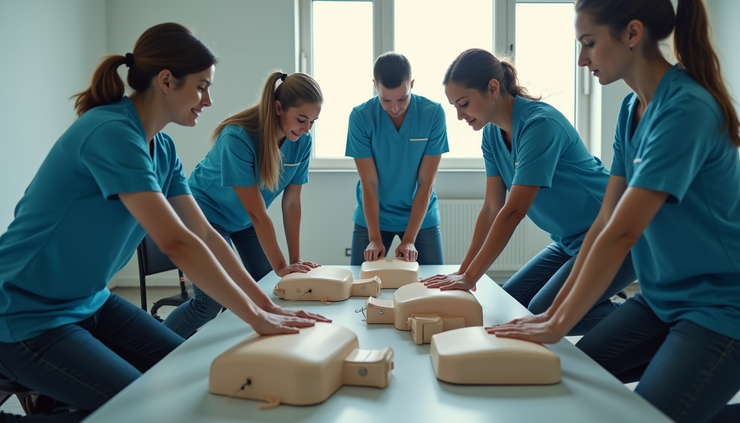
Training programs that include hands-on practice help people move from fear to confidence. Start A Heart offers practical sessions where participants learn:
How to recognize cardiac arrest symptoms quickly
How to operate an AED step-by-step
How to perform CPR alongside AED use
How to stay calm and lead in emergencies
Practicing with real devices or training models builds muscle memory. When a real emergency happens, trained individuals respond automatically instead of freezing. For example, a school that implemented Start A Heart training saw a 50% increase in staff confidence and readiness within weeks.
Training also clarifies common misconceptions. Many think AEDs deliver dangerous shocks or require medical expertise. In reality, AEDs are designed to be user-friendly. They provide clear voice prompts and will only deliver a shock if needed. This knowledge reduces hesitation.
How to Close the Gap in Your Organization
Closing the gap between owning an AED and knowing how to use it requires commitment and action. Here are practical steps:
Schedule regular training: Make AED and CPR training a mandatory part of staff onboarding and refresher courses.
Use realistic practice: Hands-on sessions with training AEDs and mannequins help build confidence.
Create clear protocols: Ensure everyone knows who is responsible for AED use and emergency response.
Promote awareness: Display signage that encourages staff to learn and practice AED use.
Test readiness: Conduct drills to simulate emergencies and evaluate response times.
Start A Heart specializes in delivering these training programs tailored to schools, businesses, and public spaces. Their approach focuses on building real skills and confidence, not just theory.
Knowing where an AED hangs is just the first step. The true power of this life-saving device comes from people who know how to use it without hesitation. Training transforms equipment from a wall decoration into a tool that saves lives.


Comments